
Today’s Current Affairs: 12th January 2026 for UPSC IAS exams, State PSC exams, SSC CGL, State SSC, RRB, Railways, Banking Exam & IBPS, etc
Table of Contents
Context Window in AI:

In the context of Artificial Intelligence (AI), specifically large language models (LLMs) like GPT-5 and Claude, the context window is the maximum amount of text the model can consider at any one time while generating a response.
- The Context Window of an Artificial Intelligence (AI) model measures how much information the AI model can remember, working similarly to humans’ short-term memory.
- AI models don’t read words; instead, they read chunks of characters called tokens.
- Context Window is the amount of text, in tokens, that the model can consider or “remember” at any one time.
- A larger context window enables an AI model to process longer inputs and incorporate a greater amount of information into each output.
- A Large Language Model’s (LLM’s) context window can be thought of as the equivalent of its working memory.
- It determines how long of a conversation it can carry out without forgetting details from earlier in the exchange.
- It also determines the maximum size of documents or code samples that it can process at once.
- When a prompt, conversation, document, or code base exceeds an AI model’s context window, it must be truncated or summarized for the model to proceed.
- Generally speaking, increasing an LLM’s context window size translates to increased accuracy, fewer hallucinations, more coherent model responses, longer conversations and an improved ability to analyze longer sequences of data.
- However, increasing context length is not without tradeoffs: it often entails increased computational power requirements—and therefore increased costs—and a potential increase in vulnerability to adversarial attacks.
Bhairav Battalions:
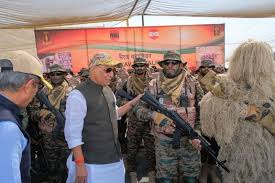
For the first time, the Indian Army’s newly raised Bhairav Battalion will march down Kartavya Path and salute the Supreme Commander during the Republic Day parade.
- They are a new class of compact, high-tech combat units of the Indian Army.
- Each battalion comprises personnel from infantry, artillery, air defence, signals, and other combat support arms.
- They are specially equipped for swift, surprise, and high-impact operations in diverse combat environments.
- Unlike Para Special Forces, which handle strategic missions deep inside enemy territory, Bhairav Battalions are positioned closer to the border.
- Their job is to handle tactical, fast-breaking situations, the kind that require immediate response rather than detailed planning.
- In the Army’s own words, Bhairav units are built to “fight tonight”, meaning they must be ready to move at short notice, often without waiting for larger formations.
- The Bhairav units will act as a bridge between Special Forces and regular infantry, aimed at freeing up Special Forces for more critical assignments.
- The battalions are being placed under corps and division-level formations, especially in sectors considered sensitive, Rajasthan, Jammu, Ladakh, and the Northeast.
- Their structure allows them to be deployed for multi-domain tasks, a mix of ground action, drone operations, and electronic support.
Central Ground Water Board:
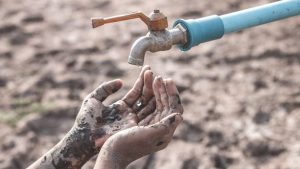
The Central Ground Water Board (CGWB) recently stated in its Annual Ground Water Quality Report-2025 that Andhra Pradesh is one of the States facing widespread contamination of groundwater as per the BIS standards.
- It is a multidisciplinary scientific organization of the Department of Water Resources, River Development and Ganga Rejuvenation, Ministry of Jal Shakti, Government of India.
- It is the National Apex Agency entrusted with the responsibilities of providing scientific inputs for management, exploration, monitoring, assessment, augmentation, and regulation of groundwater resources of the country.
- It was established in 1970 by renaming the Exploratory Tube wells Organization under the Ministry of Agriculture, Government of India.
- It was merged with the Ground Water Wing of the Geological Survey of India during 1972.
- It mandate to Develop and disseminate technologies and monitor and implement national policies for the scientific and sustainable development and management of India’s groundwater resources.
- It is headed by the Chairman and has five members.
- CGWB is a multidisciplinary scientific organization consisting of Hydrogeologists, Geophysicists, Chemists, Hydrologists, Hydrometeorologists, and Engineers.
- It has four main wings, namely
- Sustainable Management & Liaison (SML)
- Survey, Assessment & Monitoring (SAM)
- Exploratory Drilling & Materials Management (ED&MM)
- Water Quality & Training and Technology Transfer (WQ&TT).
- Headquarters: Bhujal Bhawan, Faridabad, Haryana.
- The major activities of the CGWB are National Aquifer Mapping and Management (NAQUIM) involving the preparation of Aquifer Maps and Management Plans, Groundwater explorations to delineate groundwater-worthy areas and potential aquifers, Geophysical surveys to delineate groundwater bearing zones, etc.
Hatti Tribe : Boda Tyohar
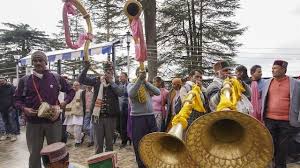
“Boda Tyohar”, the biggest annual festival of the Hati tribe in Himachal Pradesh’s Sirmour and celebrated by over three lakh community members, recently commenced with traditional fervour.
- The Hattis are a close-knit community who take their name from their age-old professional practice of selling their homegrown crops at small markets called ‘Haat’ in nearby cities.
- Hatti men traditionally don distinctive white headgear on ceremonial occasions.
- These tribal people reside in the Himachal-Uttarakhand border in the basin of the Giri and Tons rivers, both tributaries of the Yamuna.
- There are two main Hatti clans: one in the Trans-Giri area of the Sirmaur district in Himachal Pradesh and the other in Jaunsar Bawar of Uttarakhand.
- The two Hatti clans have similar traditions, and intermarriages are common.
- Jodidara is a traditional form of polyandrous marriage practised among the Hatti tribe in Himachal Pradesh, where a woman marries two or more brothers.
- Polyandry is legally recognised in Himachal Pradesh under revenue laws.
- Harris is governed by a traditional council called ‘khumbli’ which decides community matters.
- The Hatti population relies on agriculture for livelihood and bare subsistence since their climate is ideal for growing “Cash Crops.”
- The Indian government has granted Scheduled Tribe (ST) status to the Hatti community in Himachal Pradesh.
- The Jaunsar-Bawar region of Uttarakhand was granted tribal status in 1967.
- Boda Tyohar, also called Magho ko Tyohar, is the biggest annual festival of the Hatti tribe.
Osteoarthritis : New Study
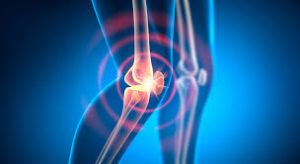
In a breakthrough, scientists at Stanford University recently identified a key protein called 15-PGDH linked to cartilage loss during aging, offering hope for new treatments for osteoarthritis.
- Arthritis is a general term that means inflammation of the joints.
- Osteoarthritis (OA), commonly known as wear-and-tear arthritis, is the most common type of arthritis.
- It is associated with a breakdown of cartilage in joints.
- Cartilage is a firm, rubbery material that covers the ends of bones in normal joints.
- Its main function is to reduce friction in the joints and serve as a “shock absorber.
- The shock-absorbing quality of normal cartilage comes from its ability to change shape when compressed (flattened or pressed together).
- Osteoarthritis causes the cartilage in a joint to become stiff and lose its elasticity, making it more susceptible to damage.
- Over time, the cartilage may wear away in some areas, greatly decreasing its ability to act as a shock absorber.
- As the cartilage deteriorates, tendons and ligaments stretch, causing pain.
- If the condition worsens, the bones could rub against each other.
- It commonly occurs in the weight-bearing joints of the hips, knees, and spine.
- It also affects the fingers, thumbs, neck, and large toe.
- It usually does not affect other joints unless previous injury, excessive stress, or an underlying disorder of cartilage is involved.
- It is more likely to develop as people age. But it can affect much younger people, too, especially those who have had a prior joint injury.
Pradhan Mantri-Rashtriya Krishi Vikas Yojana : Update
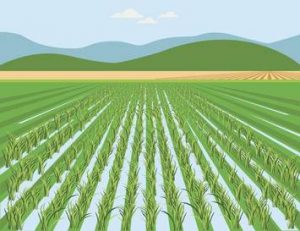
The Union Ministry of Agriculture has proposed to merge three separate ongoing schemes with its flagship Pradhan Mantri-Rashtriya Krishi Vikas Yojana.
- It is a Centrally Sponsored Scheme (CSS) operating under Ministry of Agriculture and Farmers Welfare.
- It is aimed at accelerating agricultural growth and improving farmers’ income.
- Objectives of Pradhan Mantri Rashtriya Krishi Vikas Yojana:
- To encourage States to increase public investment in agriculture and allied sectors.
- To enhance agricultural productivity and overall farm growth.
- To strengthen agricultural and post-harvest infrastructure and reduce losses.
- To promote diversification into high-value crops, horticulture, livestock, and fisheries.
- To encourage adoption of modern, innovative, and climate-resilient farming practices.
- To reduce regional disparities in agricultural development.
- Features of Pradhan Mantri Rashtriya Krishi Vikas Yojana:
- States have the flexibility to plan and implement agricultural projects according to local priorities.
- The scheme aims to achieve a sustained annual growth rate of around 4 percent in agriculture and allied sectors.
- It supports crop production, horticulture, livestock, fisheries, organic farming, agricultural research, and marketing infrastructure.
- States receive financial assistance based on their commitment to increasing public investment in agriculture.
- Funding Pattern of Pradhan Mantri Rashtriya Krishi Vikas Yojana:
- General States: 60 percent Centre and 40 percent State
- North-Eastern and Hilly States: 90 percent Centre and 10 percent State
- Union Territories: 100 percent central funding.
Nelapattu Bird Sanctuary:
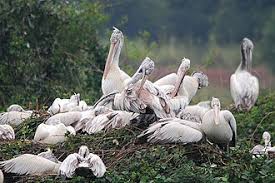
Flamingo Festival attracted many families to Nelapattu Bird Sanctuary near Sullurpeta in Andhra Pradesh
- Nelapattu Bird Sanctuary is located in the state of Andhra Pradesh.
- It is situated just near the Pulicat Lake, which is the second-largest salt lake in all of India.
- It is an important breeding site for spot-billed pelicans.
- The sanctuary is filled of significant plant communities like the Barringtonia swamp forests and the southern dry evergreen scrub.
- Plants like Buchnania angustifolia, barringtonia actutangula, Acacia arabica, Albizzia amara, Borassus flabellifer, Euphorbia antiquorum, etc are found here.
- In addition to the spot-billed pelican, it is an important breeding site for black-headed ibis, Asian openbill, black-crowned night heron, and little cormorant.
International Renewable Energy Agency : 16th Assembly
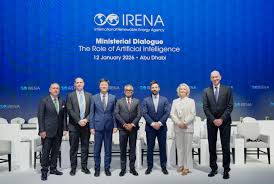
The Union Minister for New and Renewable Energy delivered India’s national statement at the 16th Assembly of the International Renewable Energy Agency (IRENA) in Abu Dhabi, United Arab Emirates.
- International Renewable Energy Agency is an intergovernmental organisation that was founded in 2009 to support countries in their transition to a sustainable energy future.
- It serves as the principal platform for international cooperation, a centre of excellence, and a repository of policy, technology, resource and financial knowledge on renewable energy.
- It has 170 Members (169 States and the European Union). India is also one of the founder members of IRENA.
- It is IRENA’s ultimate decision-making authority, made up of one representative from each Member.
- It is composed of 21 Member States elected for a two-year term and is accountable to the Assembly.
- Council members serve on a rotating basis to ensure the effective participation of both developing and developed countries and a fair and equitable geographical distribution.
- It comprises the Director-General and his staff, provides administrative and technical support to the Assembly, the Council and their subsidiary bodies.
- Its head quarter is in Abu Dhabi United Arab Emirates.
- It is an official United Nations observer.
Charophytes:
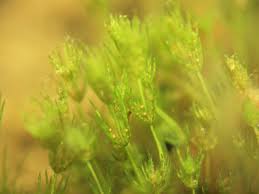
Research conducted at 27 test lakes in northeastern Germany revealed that the abundance of charophytes increased.
- Charophytes are a type of green algae.
- Fossils of Charophytes have been found going back to the Silurian Period (443 million years ago).
- This was the period when plants moved from water to land—and Charophytes are considered the closest living relatives to land plants.
- They grow in silt, mud, peat or sand, often as the first plants to colonize newly-cleared areas.
- These “plants” are found on all continents except Antarctica.
- They have no true leaves, stems nor fruits.
- These are generally submergent and are loosely attached to the sediment by thin rhizome- like structures called ‘holdfasts’.
- Seeds can remain dormant for years.
- They are unable to grow or are restricted in growth in turbid or murky waters.
- They play a crucial role in the water quality and biodiversity of lakes;
- They stabilize the lake bed, produce oxygen, promote water clarity, and provide habitat for numerous aquatic organisms.
Catastrophe Bonds:

Facing recurrent climate-induced disasters, Kerala has urged the Union government to introduce catastrophe (CAT) bonds as a financial safety net against disaster-related losses during pre-Budget consultations for Union Budget 2026–27.
- Kerala’s repeated disasters strain public finances, highlighting the need for climate-resilient financing tools like CAT bonds, recognised in its Risk-Informed Master Plan (2022), alongside demands for a Coastal Resilience Fund to address severe erosion along its 590-km coastline.
- These are insurance-linked securities that transfer the financial risk of major disasters, like hurricanes or earthquakes, from insurers or governments (sponsors) to investors.
- Under CAT bonds, Governments act as sponsors and pay premiums, while the investors’ principal serves as the insured sum; if a disaster occurs, this principal is transferred for recovery purposes, whereas if no catastrophe occurs, investors earn high interest.
- CAT bonds offer investors high yields and portfolio diversification since their returns are not directly linked to financial markets, while for governments and insurers they ensure quicker payouts, reduce reliance on budgetary allocations, and shift disaster risk to global capital markets.
- Currently, in India states and the centre bear the full fiscal burden of disaster relief.
- Countries like Mexico and the Philippines use CAT bonds to hedge against natural disasters.
- CAT bonds can provide a fiscally sustainable, predictable, and rapid financing tool for disaster-prone States. It reduces pressure on public budgets and emergency borrowing.
Bal Vivah Mukt Bharat Abhiyan:
The Union government recently marked one year of the Bal Vivah Mukt Bharat Abhiyan (BVMB) by launching a nationwide 100-day awareness campaign, reaffirming India’s commitment to the United Nations target of ending child marriage by 2030. BVMB was launched in 2024 by the Ministry of Women and Child Development, to eliminate child marriage and make India child marriage-free by 2030.It reflects India’s commitment to the UN Sustainable Development Goal (SDG) 5.3 and marks a shift from a purely legal response to a prevention- and community-driven approach.The campaign aims to reduce the prevalence of child marriage by 10% by 2026 and completely eradicate the practice by 2030.Its broader goal is to protect children’s rights, delay the age of marriage, promote girls’ education, and address the social norms and economic vulnerabilities that sustain early marriage.
Magnetic Nanorobots:
Magnetic nanorobots are microscopic, externally powered machines made from or coated with magnetic materials like iron oxide. Guided by magnetic fields from outside the body, they can be precisely steered to navigate blood vessels or tissues without an onboard power source.They mimic the corkscrew motion of bacteria, using a tiny, helix-shaped tail that functions like a propeller.A magnet attached to this helix allows it to be controlled and propelled by external magnetic fields, enabling a drilling motion to navigate through complex biological environments.Their structure is biocompatible, made of silica and iron, and can be coated with cancer drugs, effectively turning them into targeted delivery trucks.
National Youth Day 2026:
National Youth Day is observed annually on 12th January, commemorating the birth anniversary of Swami Vivekananda, whose ideals of character, courage, service, and nation-building continue to guide India’s youth-centric policies.With over 65% of India’s population below 35 years, youth empowerment is central to the vision of Viksit Bharat @2047.Swami Vivekananda, born as Narendra Nath Datta on 12th January 1863, was a monk and the chief disciple of Ramakrishna Paramhansa.In 1893, upon the request of Maharaja Ajit Singh of the Khetri State, he took the name ‘Vivekananda’, changing from ‘Sachidananda’ that he used before.
Petrodollar System:
The US capture of Venezuelan President Nicolás Maduro has renewed attention on the declining influence of the petrodollar amid changing global oil trade dynamics.Venezuela holds the world’s largest proven oil reserves (~300 billion barrels, ~17% of global stock) but produces only about 1 million barrels per day, leaving vast untapped potential.The Trump administration aims to revive Venezuela’s oil industry by involving US energy majors, potentially re-anchoring future oil production within the US economic orbit.The petrodollar system refers to the global arrangement under which international crude oil trade is predominantly priced and settled in US dollars, creating sustained global demand for the dollar and reinforcing US economic, financial, and geopolitical dominance.It emerged in the mid-1970s following the collapse of the Bretton Woods system.
OrbitAid’s AyulSAT:
India is set to demonstrate in-orbit satellite refuelling for the first time as Chennai-based OrbitAid’s AyulSAT is launched onboard ISRO’s PSLV-C62.AyulSAT is a 25-kg dedicated tanker-satellite and target spacecraft designed to demonstrate fuel transfer, power transfer and data transfer in orbit using a standardized docking and refuelling interface.Developed by OrbitAid Aerospace, a Chennai-based Indian space startup founded by Sakthikumar Ramachandran.Launched through: ISRO’s PSLV-C62 mission.Aim is to demonstrate in-orbit propellant transfer and docking readiness, enabling satellite life-extension, servicing, and reduction of space debris, and to lay the foundation of an on-orbit space economy.
Orobanche aegyptiaca:
India’s largest oilseed crop, mustard, is facing a major yield threat due to the rapid spread of the parasitic weed Orobanche aegyptiaca in Rajasthan and Haryana.Orobanche aegyptiaca (locally called Margoja) is a root-parasitic flowering weed that attaches itself to the roots of crops like mustard, extracting water, carbon and nutrients, leading to severe yield loss.It is native to the Mediterranean–West Asian region and has spread to South Asia, North Africa and parts of Europe, becoming a major problem in oilseed and vegetable crops.
Kathputli Puppetry:
Jaipur’s Kathputli Nagar, home to nearly 250 families of traditional puppeteers, has drawn attention for preserving one of Rajasthan’s oldest living folk art traditions.Kathputli is a form of traditional string puppetry of Rajasthan, where wooden dolls dressed in colourful costumes are animated with strings to narrate stories of kings, warriors, folklore and moral tales.It originated and is mainly practiced in Rajasthan, especially in Jaipur, Nagaur, Churu and Sikar, with Kathputli Nagar in Jaipur being its largest living hub.Kathputli is believed to be over 1,000 years old and was traditionally performed by travelling Bhat and Nat communities to entertain and educate village audiences during fairs, royal courts and festivals.