
Today’s Current Affairs: 20th February 2026 for UPSC IAS exams, State PSC exams, SSC CGL, State SSC, RRB, Railways, Banking Exam & IBPS, etc
Table of Contents
Indian Grey Hornbill:
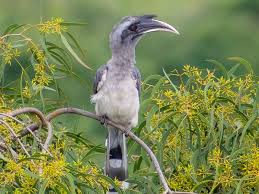
In a public poll that was conducted by the Forest Department, Indian Grey Hornbill was chosen as the ‘Bird of Tirupattur’ district of Tamil Nadu by over 41,000 voters.
- It is a common hornbill found on the Indian subcontinent.
- It is commonly sighted in pairs.
- These birds are known to be arboreal, e. spend most of their time on tall trees, but may descend for food and to collect mud pellets for nesting.
- It has grey feathers all over the body with a light grey or dull white belly.
- The horn is black or dark grey with a casque extending to the point of curvature of the horn.
- Unlike a lot of other birds, the male and female look similar.
- It Occurs in deciduous forests, open woodlands and thorn forest as well as rural cultivation and urban gardens and parks.
- Found in Indian subcontinent; found from north-east Pakistan and south Nepal east to north-west Bangladesh and south throughout most of India except in Assam.
- The food is mainly fruits, particularly figs.
- They play an essential role in the ecosystem as prime dispersers of seeds.
- Conservation status : IUCN: Least Concern.
Lakhpati Didi Initiative: In News
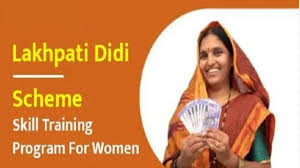
The Union Minister for Rural Development and Agriculture & Farmers’ Welfare directed officials to formulate a special, focused strategy and work on a war footing to achieve the revised target of creating 6 crore ‘Lakhpati Didis’.
- A Lakhpati Didi is a Self-Help Group member who earns an annual household income of Rupees One Lakh (Rs. 1,00,000) or more.
- This income is calculated for at least four agricultural seasons and/or business cycles, with an average monthly income exceeding Rs. 10,000 so that it is sustainable.
- It focuses on the individual SHG women and not on the Self-Help Group (SHG).
- This initiative facilitates diversified livelihood activities, by ensuring convergence across all Government departments/ Ministries, Private sector and Market players.
- Objective is to encourage women to start micro-enterprises within their villages.
- The initiative has been initiated by DAY-NRLM, wherein each SHG household is encouraged to take up multiple livelihood activities coupled with value chain interventions.
- Lakhpati Didi Strategy:
- Deepen, Strengthen and Expand Livelihood options: The households will be facilitated and enabled to take up diversified income-generating activities.
- Capacity Building: A Cascade Training Strategy is adopted to enable training and handholding of Potential Lakhpati Didis (SHG members) from across all States and Union Territories in India.
- Financial Assistance: DAY-NRLM serves as a catalyst, facilitating financial assistance and providing a platform for these women to thrive.
- Nodal Ministry: Ministry of Rural Development
- Revised Target: 6 crore Lakhpati Didis by March 2029.
VoicERA:
The Ministry of Electronics and Information Technology unveiled VoicERA at the India AI Impact Summit 2026.
- It is an open-source, end-to-end Voice AI stack.
- It is deployed on the BHASHINI National Language Infrastructure.
- It establishes a national execution layer for multilingual Voice and Language AI.
- It is designed to be open, pluggable, interoperable, cloud deployable, and on premise ready.
- The platform enables secure and scalable deployment of voice systems across government, research institutions, and innovation ecosystems.
- Significance:
- Modularising the voice stack reduces duplication of effort and eliminates vendor lock-in
- The integration of VoicERA strengthens BHASHINI’s role as India’s national language
- It expands BHASHINI’s capabilities from translation and language technologies to real-time speech systems, conversational AI, and multilingual telephony at a population scale.
- BHASHINI or the BHASHa INterface for India, is an artificial intelligence (AI)-powered language translation platform.
- It is developed by the Ministry of Electronics and Information Technology (MeitY) under its National Language Translation Mission.
- It aims to build a National Public Digital Platform for languages to develop services and products for citizens by leveraging the power of AI and other emerging technologies.
- It helps people translate content into various Indian languages.
- It uses cutting-edge AI and natural language processing (NLP) technologies to bridge the language divide, enabling users to access content and services in their preferred language.
- It is implemented by Digital India BHASHINI Division, a division under Digital India Corporation, a Section 8 Company of the MeitY.
- Bhashini currently supports more than 22 languages, enabling inclusivity for a broad range of linguistic communities.
Shahpur Kandi Dam Project:
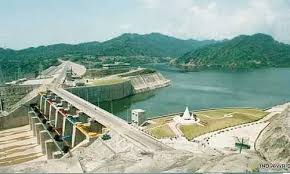
India plans to block the surplus water flow from the Ravi River to Pakistan as the delayed Shahpur Kandi dam on the J&K–Punjab border heads for completion.
- It is located on the Ravi River in Pathankot district, Punjab, downstream from the existing Ranjit Sagar Dam.
- The water released by Ranjit Sagar Dam is utilized for generating power from this project.
- Declared a national project in 2008, the dam is being built with Punjab contributing 80 percent and the Centre funding the remaining 20 percent.
- It is constructed by the irrigation department of the Government of Punjab.
Defence Acquisition Council:
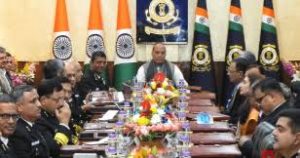
The Defence Acquisition Council (DAC) recently cleared proposals worth nearly 3.60 lakh crore rupees to enhance the capability of the Armed Forces.
- It is the highest decision-making body of the Defence Ministry on procurement.
- The main objective of the DAC is to ensure expeditious procurement of the approved requirements of the armed forces in terms of capabilities sought and time frame prescribed by optimally utilizing the allocated budgetary resources.
- It was formed after the Group of Minister’s recommendations on ‘Reforming the National Security System’, in 2001, post-Kargil War (1999).
- The Defence Minister is the chairman of DAC.
- Its members include Chief of Defence Staff (CDS) and chiefs of Army, Navy and Air Force.
- Functions:
- Give in principle approval of a 15-year Long Term Integrated Perspective Plan (LTIPP) for defence forces.
- Accord of acceptance of necessity to acquisition proposals.
- Categorisation of the acquisition proposals relating to ‘Buy’, ‘Buy & Make’, and ‘Make’.
- Look into issues relating to single vendor clearance.
- Take decisions regarding ‘offset’ provisions in respect of acquisition proposals above Rs 300 crore.
- Take decisions regarding the Transfer of Technology under the ‘Buy & Make’ category of acquisition proposals.
- Field trial evaluation
Lake Victoria:
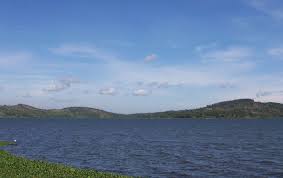
Lake Victoria’s waters have turned a haunting green, and scientists say the damage has crossed a dangerous line.It is the largest lake in Africa.
- It lies mainly in Tanzania and Uganda but also borders Kenya.
- It is also called Victoria Nyanza in Kenya, Nalubaale in Uganda, and Ukerewe in Tanzania.
- It is crossed by the equator.
- After Lake Superior in North America, it is the second-largest freshwater lake on Earth.
- It is the world’s largest tropical lake.
- The Kagera River is the major river that empties into the lake.
- It is the chief reservoir of the Nile River.
- The lake supports the largest freshwater fishery in the world.
Charax Spasinou:
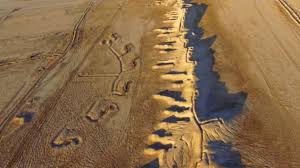
Deep in the deserts of Iraq, the lost city of Charax Spasinou has finally been found.
- It was an ancient port city located at the confluence of the Tigris and Choaspes rivers, near the modern border of Iraq and Iran.
- Founded during the Hellenistic period, it was initially established by Alexander the Great.
- It was reportedly founded in 324 BCE.
- The city was later rebuilt by Hyspaosines, who became its first king and is recognized for founding the kingdom of Characene with Charax Spasinou as its capital.
- Due to its favourable location, Charax became a very important harbour in the Persian Gulf area and a major trading point between Mesopotamia (a region in the Middle East) and India.
- The city was home to a succession of local rulers who minted coins from the late second century BC to the third century AD.
- Charax’s prominence waned around AD 224–28 with the rise of the Sassanian Empire, marking the end of Characene’s political significance.
Alpheus madhusoodanai:
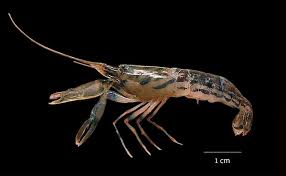
Researchers recently discovered a new species of pistol shrimp named Alpheus madhusoodanai in the Kochi backwaters
- Alpheus madhusoodanai is a new species of pistol shrimp, also known as snapping shrimp.
- It was discovered from Kochi backwaters, Kerala.
- It belongs to the family Alpheidae.
- It is the first alpheid shrimp species to be recorded from an estuary in the region.
- It has a burrowing tendency and contributes to the health of mangrove ecosystems by releasing toxic gases trapped in swampy soil.
- The pistol shrimp, also known as the snapping shrimp, possesses an extraordinary weapon — an oversized claw that can “fire” underwater bullets made of bubbles.
- These aren’t ordinary bubbles — they’re created through a process called sonoluminescence, “in which water is energised with specific vibrations causing emission of light through bubbles.
- The resulting temperatures can reach an astounding 4,400°C — nearly as hot as the surface of the sun.
- The sounds produced when the pistols of these shrimps are fired are among the loudest sounds that can be heard in the oceans.
- The pistol shrimp primarily uses this powerful weapon to catch prey.
- When hunting, it hides in its burrow, waiting for prey to come within range before firing its claw with remarkable speed and precision.
- There are hundreds of species found all over the world, but most species are found in reefs and seagrass beds in temperate and tropical regions.
H-125 Helicopter:
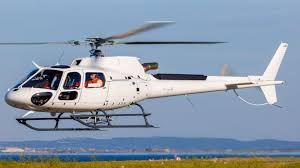
The Prime Minister of India and the French President inaugurated Final Assembly Line of the Airbus H-125 Light Utility Helicopter, located at Vemagal, Karnataka.
- It is a single‑engine light utility helicopter from the legendary Ecureuil family.
- It is valued for its reliability, low maintenance and adaptability.
- The H125 is the only helicopter in history to have landed on the summit of Mount Everest.
- It is used in emergency services, aerial filming, tourism, law enforcement, firefighting, and civil transport.
- Features of H-125 Helicopter
- High‑Altitude Performance: It can operate efficiently in “hot and high” environments, meaning high mountains or hot desert conditions.
- Operational Versatility: It can be reconfigured for multiple roles such as rescue, medical evacuation, firefighting, passenger transport, and aerial work missions.
- Simple and Robust Design: Its reliable engine and aerodynamics make it easier to maintain and operate in varied conditions.
- High Cruise Speed and Range: With a range of approximately 662 km, it is capable of covering long distances without compromising performance.
- It provides edge in high-altitude logistics, ensuring the delivery of vital supplies to remote frontline outposts, and serves as a rapid-response asset for search and rescue or medical evacuation operations.
80 Years of the RIN Revolt:
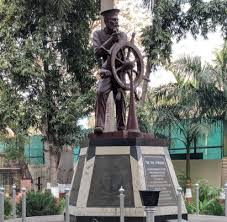
18th February, 2026 marks the 80th anniversary of the Royal Indian Navy (RIN) Revolt of 1946, a short-lived but momentous armed uprising, symbolising militant anti-colonial resistance and rare Hindu-Muslim unity in the final phase of British rule.
- It was a large-scale insurrection, with over 20,000 naval ratings participating.
- It involved 78 ships and 20 shore establishments, including HMIS Talwar in Bombay, and spread to naval bases in Karachi, Madras, Cochin, Vishakhapatnam, Calcutta, and the Andaman Islands.
- Sympathetic strikes also occurred in the Royal Indian Air Force in Bombay, Poona, Calcutta, Jessore, and Ambala.
- The revolt was sparked by ratings at HMIS Talwar in Bombay over poor food quality, low wages, racial discrimination, abuse by superior officers, and the arrest of a rating for scrawling ‘Quit India’ on the ship.
- A Naval Central Strike Committee was formed, and they protested against the trials of Indian National Army (INA) prisoners of war and the use of Indian troops to restore French and Dutch colonial rule in Vietnam and Indonesia
- The British held the first trial at the Red Fort in Delhi in November 1945, putting a Hindu (Prem Kumar Sehgal), a Muslim (Shah Nawaz Khan), and a Sikh (Gurbaksh Singh Dhillon) in the dock together.
- At its September 1945 Bombay session, Congress passed a strong resolution supporting the INA cause. The defence was organized by Bhulabhai Desai, Tej Bahadur Sapru, Kailash Nath Katju, Jawaharlal Nehru, and Asaf Ali.
- The campaign saw participation from diverse groups, including the Muslim League, Communist Party of India, Unionists, Akalis, Justice Party, Ahrars, RSS, Hindu Mahasabha, and the Sikh League. Even loyalists and government employees collected funds.
- During the uprising, naval ratings organized a procession carrying a portrait of Subhas Chandra Bose.
- On the mast of the rebel fleet, they defiantly hoisted the flags of the Congress, the Muslim League, and the Communist Party (hammer and sickle) together.
- The peaceful hunger strike transformed into an armed uprising when British military forces opened fire on the naval ratings.
- In response, ratings inside the barracks waged a pitched battle with firearms, and rebel ships in the harbour manned their guns, threatening a full-scale military conflict to defend their comrades on shore.
- The revolt triggered a popular uprising in Bombay.
- Hindu and Muslim protesters jointly took to the streets, observing a hartal. The crowd raided post offices, dug up tram tracks, set up barricades with boulders and barrels, lit bonfires, and torched buses and military vehicles.
- Bombay’s mill district emerged as the epicentre.
- All textile mills, railway workshops, and factories were closed.
Bharat VISTAAR:

The Ministry of Agriculture launched Phase-1 of the AI-based ‘Bharat VISTAAR’ scheme in Jaipur, Rajasthan, amid the AI Summit in Delhi to digitally empower farmers.
- ‘Bharat VISTAAR’ is a multilingual Artificial Intelligence(AI) based conversational advisory system that allows farmers to ask agriculture-related questions through mobile or smartphone and receive instant solutions.
- Objective is to make agriculture accessible, affordable and technology-driven through AI-based personalised advisory and strengthen farmer self-reliance.
- Farmers can dial the helpline number 155261 to get immediate answers in their local language (currently Hindi and English, soon expanding to 11 languages) and check real-time mandi prices across India.
- It combines AgriStack, Indian Council of Agricultural Research(ICAR) knowledge systems, India Meteorological Department (IMD) weather inputs, market prices and government schemes into one digital interface.
- A digital Farmer Identity Card will store farmer data and integrate services like PM Fasal Bima Yojana and Soil Health Card.
- Provides guidance on soil testing, seeds, fertilisers, irrigation, loans, insurance and scheme benefits while improving productivity and reducing risks.
- Alongside the launch, a farmer-centric AI Hackathon and the Agri Kosh AI Strategy Roadmap were unveiled to promote innovation in agricultural technology.
SAHI & BODH Health AI Initiatives:

The Union Health Minister launched two digital initiatives, Secure AI for Health Initiative (SAHI) and Benchmarking Open Data Platform for Health AI (BODH), at the India AI Impact Summit 2026 to strengthen India’s health AI ecosystem.
- SAHI functions as a national roadmap and policy framework guiding responsible AI adoption through accountability, privacy protection and citizen-centric safeguards.
- BODH provides a structured platform to test, benchmark and validate AI health solutions for performance, safety and real-world readiness before deployment.
- Objective is to ensure AI solutions in healthcare are safe, reliable, evidence-based and people-centric while strengthening public trust.
- The initiatives build on the vision of the National Health Policy 2017 and the Ayushman Bharat Digital Mission (2020) to create an interoperable and scalable digital health infrastructure.
- The framework promotes interoperable and consent-based health data systems to ensure security and public trust in digital health technologies.
- It enables coordinated participation of government, academia and industry to integrate AI solutions in healthcare responsibly.
- AI tools can improve diagnostics, accelerate drug discovery, strengthen clinical decision-making and make healthcare delivery affordable and accessible.
Bee Corridor:

The National Highways Authority of India (NHAI) has launched a first-of-its-kind initiative to develop pollinator or ‘Bee Corridors’ along National Highways to promote ecological infrastructure development.
- The ‘Bee Corridor’ will have a continuous stretch of flowering trees, shrubs, herbs and grasses that will provide year-round nectar and pollen through staggered seasonal flowering cycles.
- The project shifts highway plantations from ornamental greenery to biodiversity-supportive vegetation to protect honeybees and other pollinators.
- Native species such as Neem, Karanj, Mahua, Palash, Bottle Brush, Jamun and Siris will be planted, while flowering weeds, dead wood and hollow trunks will be retained for pollinator habitats.
- Corridors will be developed along suitable highway stretches and vacant NHAI land, with flowering clusters every 500 m–1 km based on bee foraging distance.
- Approximately 40 lakh trees are planned to be planted during 2026–27, of which nearly 60% will be under the Bee Corridor initiative, with at least three pollinator corridors to be developed in the initial phase.



