
Today’s Current Affairs: 7th January 2026 for UPSC IAS exams, State PSC exams, SSC CGL, State SSC, RRB, Railways, Banking Exam & IBPS, etc
Table of Contents
Justice Mission 2025:

China’s military moved army, naval, air force, and artillery units around Taiwan recently for its “Justice Mission 2025” drills.
- It is a large-scale inter-service military exercise by China around Taiwan.
- It involves coordinated ground, air, navy, and missile units.
- The activities focussed on “sea-air combat readiness patrol, joint seizure of comprehensive superiority, blockade on key ports and areas, as well as all-dimensional deterrence outside the island chain.
- The drills aim to test joint combat capabilities and serve as a warning against “Taiwan independence” and external interference, asserting China’s sovereignty over the island.
- Beijing claims Taiwan as part of its sovereign territory and has refused to rule out using military action to seize the island democracy.
- The exercise follows large-scale arms sales to Taiwan valued at more than USD 10 billion by the United States, Taiwan’s main security backer.
Dnyanganga Wildlife Sanctuary:
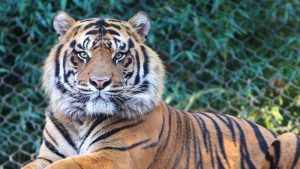
A tiger cub identified as PKT7CP1, rescued three years ago, has been recently sent to Dnyanganga Wildlife Sanctuary in Maharashtra’s Buldhana district for rewilding.
- It is located in the Buldhana district of Maharashtra, near the Dnyanganga River.\
- It is part of the Melghat Tiger Reserve.
- The sanctuary features two lakes.
- It is bordеrеd by Wеstеrn Ghats.
- It has a very extreme climate; the winters are very cold, whereas the summers are very hot.
- The forest area is Southern tropical dry deciduous forest, consisting mainly of Teak and Anjan.
- The sanctuary is home to diverse wildlife, including leopards, sloth bears, barking deer, blue bulls (nilgai), spotted deer, hyenas, jungle cats, jackals, and occasionally tigers.
- Over 150 bird species also inhabit the area.
Calamaria mizoramensis:
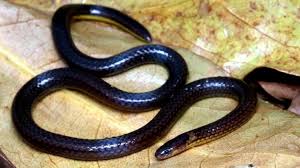
A new species of reed snake was recently found in Mizoram, which the researchers named after the state where it was found, calling it Calamaria Mizoramensis.
- It is a new species of non-venomous reed snake.
- It was discovered in Mizoram.
- The new species is nocturnal and semi-fossorial, inhabiting humid, forested hill environments.
- The new species is small with a dark brown to blackish body with faint stripes and a yellow underside.
- Its occurrence in other parts of India remains unverified, but it is likely to be present in adjoining states such as Manipur, Nagaland, and Assam.
- Reed Snakes are small, slender, non-venomous
- They belong to the genus Calamaria.
Popocatépetl Volcano:
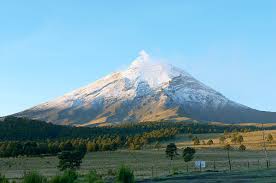
A team of scientists obtained first 3D images from inside Mexico’s Popocatépetl volcano.
- Popocatépetl means “Smoking Mountain” in the Aztec Nahuatl language.
- It is located in central Mexico.
- It is on the border of the states of México and Puebla.
- The volcano lies on the Trans-Mexican Volcanic Belt, which is the result of the small Cocos Plate subducting beneath the North American Plate.
- It is one of the Mexico’s most active volcanoes.
- It is a steep-sided stratovolcano.
- It is one of the most dangerous volcanoes in the Pacific Ring of Fire.
- Stratovolcano is a tall, steep, and cone-shaped type of volcano. They are typically found above subduction zones, and they are often part of large volcanically active regions, such as the Ring of Fire that frames much of the Pacific Ocean.
Suryastra Rocket System:
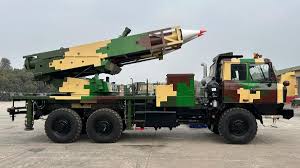
The Indian Army has signed a ₹293 crore contract with private defence manufacturer NIBE Limited, in collaboration with Israel, for the supply of suryastra rocket launcher system.
- It is India’s first indigenous universal multi-calibre rocket launcher system.
- It is an advanced long-range rocket launcher system.
- It is capable of executing precision surface-to-surface striking targets at ranges of 150 and 300 kilometers.
- It is designed to engage multiple targets simultaneously at varying ranges.
- It achieves a high degree of accuracy with a circular error probable (CEP) of less than five metres during trials.
- The same launcher is also capable of firing loitering munitions up to a range of 100 km.
- The system is based on Elbit Systems’ PULS (Precise & Universal Launching System) launcher technology.
- It is equipped with a modern fire control system that integrates GPS, inertial navigation, and digital ballistic computation.
- Its semi-automated reload and shoot-and-scoot capabilities reduce exposure to counter-battery fire.
- It is developed by Pune-based NIBE Limited in collaboration with Israel’s Elbit Systems.
Rice Crop:

The Union Agriculture Minister said India’s rice production has reached 150.18 million tonnes, compared to China’s 145.28 million tonnes.
- Rice is a tropical crop and the staple food for the majority of the Indian population.
- It is primarily a Kharif crop, grown during the southwest monsoon season (June to October) but it can also be cultivated in Rabi and summer seasons under assured irrigation.
- Required Climatic Conditions for Rice Crop:
- Rice is grown under varying conditions in India from 8°N to 30°N latitude.
- The average annual rainfall required for rice is 150 cm.
- Temperature: Between 25°C and 35°C.
- It can be grown on a variety of soils including silts, loams and gravels and can tolerate acidic as well as alkaline soils.
- The crop requires standing water during most of its growing season
- It is most commonly cultivated in states such as West Bengal, Uttar Pradesh, Punjab, Andhra Pradesh, Tamil Nadu, Bihar, Odisha, and Assam.
- It has a higher nutritional value and rich in Vitamins A, B, and calcium.
Somnath Swabhiman Parv:
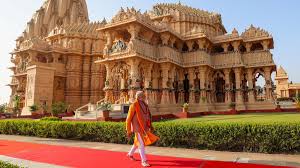
The Prime Minister stated that the thousand-year survival of the Somnath temple symbolizes India’s indomitable spirit, as the nation celebrates Somnath Swabhiman Parv (1026–2026) for a millennium of unbroken faith and resilience.
- The Somnath Temple, located at Prabhas Patan on Gujarat’s coast, is the first Jyotirling among the 12 holy Shiva Jyotirlingas, as stated in the Shiva Purana and Dwadasha Jyotirling Stotram.
- It is also the Neejdham Prasthan Leela site where Lord Shri Krishna took his last journey.
- Identified as a Tirthdham of immense antiquity, revered alongside Ganga, Yamuna, and Saraswati in Vedic literature.
- According to tradition, it was built in phases—first in gold by Somraj (Moon God), then in silver by Ravana, later in wood by Lord Krishna.
- King Bhimdev I (or Bhima I) of the Solanki dynasty rebuilt the temple in stone after its destruction by Mahmud of Ghazni in 1026 CE.
- Situated at the confluence of Kapila, Hiran, and Saraswati rivers with the Arabian Sea.
- Abadhit Samudra Marg (Tirth Stambh) indicates an uninterrupted sea route to the South Pole, with the nearest landmass ~9,936 km away, reflecting ancient Indian geographical knowledge.
- It is built in the Kailas Mahameru Prasad style. The structure includes Garbhgruh, Sabhamandap, and Nrityamandap. It has a 155-foot-high Shikhar.
- First major attack in 1026 AD by Mahmud of Ghazni; documented by Persian scholar Al-Biruni.
- The temple was looted and destroyed multiple times, including in 1026, 1297, 1394, and 1706 CE (Aurangzeb). 2026 marks 1,000 years since the first attack, a significant civilisational milestone.
- The 7th existing temple was rebuilt post-independence as a symbol of national resurgence. Sardar Vallabhbhai Patel initiated the reconstruction in 1947.
- The Pran-Pratistha was performed by President Dr. Rajendra Prasad on 11th May, 1951. Reconstruction was supported by KM Munshi, author of “Somanatha: The Shrine Eternal”.
- Visited by Swami Vivekananda in 1890s, who described Somnath as embodying India’s national life-current—destroyed and reborn repeatedly.
Revered by saints across traditions, including Jain Acharya Hemchandracharya. - Maintained ritual continuity by Maharani Ahilyabai Holkar during adverse political conditions.
- Somnath symbolises faith over fanaticism, creation over destruction, and the eternity of Indian civilisation, echoing the Gita’s message of the indestructible soul.
Himalaya climate funding:
A recent synthesis report by International Centre for Integrated Mountain Development (ICIMOD) has estimated that India needs about $102 billion annually to bridge climate adaptation and mitigation gaps in the Himalayan region amid accelerating climate risks.
- The estimate emerges from ICIMOD’s synthesis based on the First Determination Report (2020) submitted to the UNFCCC, assessing adaptation and mitigation costs in the Hindu Kush Himalaya (HKH) region.
- The HKH spans 8 countries—India, China, Afghanistan, Pakistan, Nepal, Bangladesh, Bhutan, and Myanmar—and supports nearly half of the global population through water, biodiversity, and ecosystem services.
Findings in the report:
- Scale of finance needed:
- Total HKH requirement: ~$768.7 billion per year.
- India: ~$102 billion/year; China: ~$605 billion/year (together >92% of total needs).
- Rising climate risks: Accelerated glacial melt, increased extreme weather, biodiversity loss, and water insecurity, threatening ecosystems and downstream livelihoods.
- Uneven vulnerability: Smaller economies (Nepal, Bhutan, Bangladesh, Pakistan, Afghanistan, Myanmar) face severe financing gaps relative to GDP, heightening climate vulnerability.
- Priority investment sectors: Agriculture, water resources, energy, and urban development dominate funding needs for resilience and low-carbon transitions.
- Regional interdependence: Himalayan degradation has transboundary impacts on rivers, food security, disaster risks, and regional stability.
First meeting of the Payments Regulatory Board:
The first meeting of the Payments Regulatory Board (PRB) was held in Mumbai under the chairmanship of Sanjay Malhotra, marking the operationalisation of the new payments governance framework.The Payments Regulatory Board (PRB) is the statutory body through which the Reserve Bank of India exercises regulatory and supervisory powers over payment and settlement systems in India, ensuring safety, efficiency, and stability of digital and non-cash payments.Created under Section 3 of the Payment and Settlement Systems Act, 2007.
Replaced the earlier Board for Regulation and Supervision of Payment and Settlement Systems (BPSS).Brought into effect from 9 May 2025 following amendments notified by the Government of India.
World’s second National Environmental Standard Laboratory:
India has inaugurated the world’s second National Environmental Standard Laboratory (NESL) and the world’s fifth National Primary Standard Facility for Solar Cell Calibration at CSIR–NPL, New Delhi.The National Environmental Standard Laboratory is an apex national facility for testing, calibration, and certification of air pollution monitoring equipment under Indian climatic and environmental conditions. Located in: CSIR–National Physical Laboratory, New Delhi.Organisations involved: Council of Scientific & Industrial Research (CSIR),CSIR–National Physical Laboratory (NPL).The National Primary Standard Facility for Solar Cell Calibration is an advanced metrology facility for high-precision calibration of solar cells, ensuring global-standard photovoltaic (PV) measurements.
India’s First Urban Night Safari At Kukrail Forest Area:
Lucknow is set to introduce India’s first urban night safari at the Kukrail Forest Area, marking a unique blend of wildlife conservation and city-based tourism.India’s first urban night safari—a controlled nocturnal wildlife viewing experience within city limits, designed for education, conservation awareness, and low-impact tourism rather than entertainment-driven spectacle.Located in Lucknow, Uttar Pradesh Kukrail Forest Area, along the Kukrail River on the northern outskirts of the city
Global Environment Facility:
The Global Environment Facility has approved US$52.8 million for four new UN Environment Programme–led projects at its 70th Council meeting.The Global Environment Facility (GEF) is a multilateral environmental financing mechanism that provides grants and blended finance to developing countries and economies in transition to address global environmental challenges.
Karur Vysya Bank Cuts Base Rate and BPLR:
Karur Vysya Bank has announced a reduction in its lending rates, providing potential relief to borrowers. As per an exchange filing, the private sector bank will revise both its Base Rate and Benchmark Prime Lending Rate (BPLR) with effect from January 7, 2026, reflecting an easing stance in lending costs.Karur Vysya Bank has reduced its Base Rate and BPLR. The revised rates will come into effect from January 7, 2026, and are expected to impact loan pricing linked to these benchmarks.Karur Vysya Bank announced that its Base Rate has been reduced from 11.15% to 10.70%.
While the Benchmark Prime Lending Rate (BPLR) has been cut from 16.15% to 15.70%.These revisions were disclosed through an official exchange filing and will be applicable from January 7, 2026.
India’s Largest Inland Rainbow Trout Farm Launched in Telangana:
India’s fisheries sector marked a major technological milestone with the launch of a large-scale trout farming project in Telangana. Traditionally limited to cold Himalayan regions, trout cultivation has now been successfully adapted to a warm inland climate. The initiative reflects India’s push toward innovation-driven aquaculture, value addition, and export-oriented growth in fisheries.Union Minister Rajiv Ranjan Singh inaugurated the country’s largest integrated inland Rainbow Trout farm in Telangana. The facility, located in Ranga Reddy district, showcases advanced aquaculture engineering that enables cold-water fish farming in warm regions.
India Introduces New e-Business Visa for Chinese Nationals:
India has launched a new electronic business visa category to simplify and regulate business travel for Chinese nationals. The e Production Investment Business Visa, called the e-B-4 Visa, aims to support legitimate business activities and respond to rising demand for structured business engagement between India and China.India has introduced the e-B-4 Visa for Chinese business travellers. The move is intended to ease travel for investment and production-related activities while supporting gradual normalization of India–China people-centric exchanges.The e-B-4 Visa is a new electronic business visa introduced by India for Chinese nationals. It can be applied for entirely online without visiting the embassy. The visa is designed specifically for production, investment, and technical business activities rather than general commercial visits.
Eastern Imperial Eagle Spotted at Mudumalai Tiger Reserve:
A rare migratory bird of prey, the Eastern Imperial Eagle, has been spotted at Mudumalai Tiger Reserve during the 2025–26 winter season. Wildlife experts say the sighting confirms Mudumalai’s growing role as an important winter refuge for long-distance migratory raptors visiting the Indian subcontinent.The Eastern Imperial Eagle, a rare winter migrant to India, was sighted at Mudumalai Tiger Reserve. This confirms the reserve’s importance as a critical habitat for migratory birds of prey.A pair of Eastern Imperial Eagles was recorded at Mudumalai by wildlife photographer Murali Moorthy.
One image also showed the eagle alongside an endangered Egyptian vulture, making the sighting ecologically significant. The species breeds in Central and Western Asia and migrates south during winter, occasionally reaching India.
MoSPI launches new logo and mascot Sankhyiki:
Ministry of Statistics and Programme Implementation (MoSPI) unveiled its new logo and official mascot ‘Sankhyiki (सांख्यिकी)’ in New Delhi, Delhi. This initiative marks an important step towards modernising the ministry’s institutional identity, strengthening public outreach, and reinforcing the importance of official statistics in national development.The launch aligns with the central theme “Data for Development”, highlighting the growing role of reliable, timely, and transparent data in evidence-based policymaking and governance
DRDO Develops Portable Water Purifier for Soldiers in Remote Areas:
India’s defence research ecosystem has taken another step to support troops operating in extreme and remote conditions. The Defence Research and Development Organisation has developed a portable water purification system that can be manually operated in the field. Designed mainly for soldiers, the system can convert saline water into safe drinking water, ensuring reliable hydration during long patrols and deployments in water-scarce regions.The Defence Research and Development Organisation has developed a hand-operated Sea Water Desalination System (SWaDeS) to meet the drinking water needs of soldiers deployed in remote, coastal, and high-altitude areas.
Justice A Muhamed Mustaque Appointed Chief Justice of Sikkim High Court:
The judiciary in Sikkim witnessed an important development with the appointment of a new Chief Justice to its High Court. The swearing-in ceremony marks a leadership transition aimed at strengthening the delivery of justice in the state. The appointment brings experience from other High Courts and is expected to contribute to efficient judicial administration.A Muhamed Mustaque took oath as the Chief Justice of the Sikkim High Court on January 4, 2026. He was sworn in at an official ceremony held at Lok Bhawan in Sikkim.
Building a Green Economy for Viksit Bharat:
A recent CEEW report on ‘Building a Green Economy for Viksit Bharat’ has highlighted that India cannot achieve its USD 30 trillion economy target by 2047 without mainstreaming women into green value chains.The inclusion of women in India’s green economy refers to expanding women’s participation, leadership, and income generation across energy transition, circular economy, and bio-economy & nature-based solutions, ensuring that green growth is job-intensive, equitable, and productivity-enhancing rather than extractive or exclusionary.Women’s labour force participation is 41.7% vs 78.8% for men, far below what is needed for India’s green growth trajectory.A 1% rise in gender diversity in formal manufacturing correlates with ~2.9% higher labour productivity, underscoring economic gains from inclusion.
Dharmendra Pradhan to Release 41 New Books on India’s Classical Languages:
India is taking another step to preserve and promote its classical language heritage. Union Education Minister Dharmendra Pradhan will release 41 newly developed literary works prepared by Centres of Excellence for classical languages. The initiative reflects the government’s focus on making ancient knowledge accessible to modern learners through inclusive and innovative formats.Union Education Minister Dharmendra Pradhan is set to release 41 literary works developed by Centres of Excellence for Classical Kannada, Telugu, Malayalam and Odia, along with Tirukkural books and a sign language series in New Delhi.



