
Annatto:
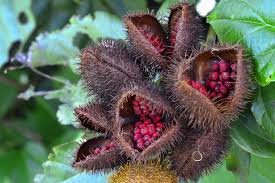
As informed by the Council of Scientific and Industrial Research (CSIR), the CSIR–Central Food Technological Research Institute (CSIR–CFTRI), Mysuru had undertaken four Grant-in-Aid projects related to the study and development of annatto.
- It is a natural food colouring and flavoring agent obtained from the seeds of the achiote tree (Bixa orellana), native to the tropical regions of the Americas.
- About 70% of natural food colors come from annatto.
- It adds a yellow-orange color to foods like cheese, butter, yogurt, sausage, smoked fish, ice cream, and baked goods.
- The bold color comes from carotenoids, which are plant pigments that are found in the coating of the seed.
- It is most often ground up into a powder or paste form for use.
- Its color can also be extracted from the seed and then added to foods as a dye.
- Some also use annatto to boost the flavor of certain dishes.
- It has a mild, peppery flavor when used in large amounts as well as a nutty and floral scent.
- It is safe for most people when used in normal food amounts. However, it might cause allergic reactions in some sensitive people.
- It has been linked to various benefits, including reduced inflammation, improved eye and heart health, and anticancer properties.
- It is rich in several key antimicrobial compounds, which can limit the growth of bacteria, fungi, and parasites.
- It is rich in antioxidants, or compounds that help neutralize the effects of harmful free radicals that can build up and cause damage to cells.
- It is high in tocotrienol, a form of vitamin E that some studies show could help with keeping bones strong and healthy.
- Annatto seeds are sometimes also ground up and applied topically to help enhance the health of your skin.



