
Carbon-based Filter for PFAS Removal from Groundwater:
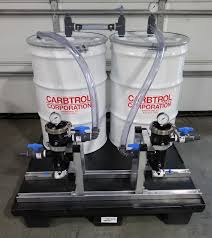
A recent field-based study demonstrates that a specially engineered carbon material can be injected underground to trap and remove PFAS (Per- and Polyfluoroalkyl Substances) from contaminated groundwater, offering a cost-effective, long-term remediation solution for polluted sites
- Per- and Polyfluoroalkyl Substances (PFAS) are a large family of synthetic chemicals, widely known as “Forever Chemicals” due to their extreme environmental persistence.
- PFAS are extensively used in non-stick cookware, water-resistant clothing, food packaging, cosmetics, firefighting foams, metal coatings, and industrial lubricants.
- The carbon–fluorine (C–F) bond, one of the strongest covalent bonds in chemistry, makes PFAS highly resistant to degradation, leading to widespread groundwater contamination, especially near military, industrial, and municipal sites.
- Carbon-Based PFAS Remediation is a novel in-situ groundwater treatment approach, the field study published in the Journal of Hazardous Materials.
- The study evaluated a specially engineered ultra-fine carbon material, known as Colloidal Carbon Product (CCP), designed to adsorb and immobilise PFAS in groundwater.
- The technology uses a “push–pull” testing method, where CCP is injected underground to form an in-situ permeable treatment zone, and groundwater is later extracted to measure PFAS reduction.
- Unlike surface treatment methods, this approach is non-invasive, subsurface-based, and suitable for long-term remediation.



