
Today’s Current Affairs: 5th February 2026 for UPSC IAS exams, State PSC exams, SSC CGL, State SSC, RRB, Railways, Banking Exam & IBPS, etc
Table of Contents
Pennaiyar River:
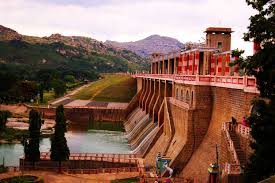
The Supreme Court recently directed the Centre to constitute a tribunal to adjudicate the dispute between Tamil Nadu and Karnataka over the sharing of Pennaiyar River water.It is a water-sharing dispute between the Indian states of Tamil Nadu and Karnataka.
- The Pennaiyar River is a major river in southern India flowing through Tamil Nadu and Karnataka.
- It is also known as the South Pennar River, Dakshina Pinakini in Kannada, and Thenpennai, Ponnaiyar, or Pennaiyar in Tamil.
- It originates in the Nandi Hills in the Chikkaballapura district of Karnataka.
- It then flows through Tamil Nadu, where it enters the Bay of Bengal at Cuddalore.
- Major tributaries are the Chinnar, Markanda, Vaniar, and Pamban.
- It has reservoirs at Krishnagiri and Sathanur.
World Wetlands Day 2026:
World Wetlands Day 2026 theme explores the long-standing connections between the habitats and cultural practices, traditions and knowledge systems of communities.
- It is celebrated every year on 2 February.
- It was first celebrated in 1997 and has been a United Nations International Day since 2022.
- It marks the anniversary of the Ramsar Convention, signed in Ramsar, Iran, on 2 February 1971.
- The agreement is also known as the Convention on Wetlands of International Importance.
- It is one of the oldest modern international environmental agreements and the only one focused entirely on a single ecosystem: wetlands.
- There are 172 Contracting Parties to the convention.
- Each year, the Convention Secretariat leads the World Wetlands Day campaign, with participation from governments, conservation organisations, businesses, NGOs, media, youth groups, and communities worldwide.
- World Wetlands Day 2026 Theme: The global theme for 2026, ‘Wetlands and Traditional Knowledge: Celebrating Cultural Heritage’, highlights the role of indigenous and local communities in conserving and managing wetlands.
SAKSHAM 2026:
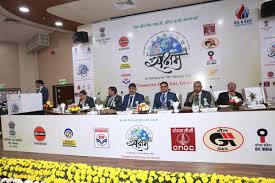
The campaign SAKSHAM 2026 has been recently inaugurated by the oil industry.
- Saksham (Samrakshan Kshamatha Mahotsav) is an annual awareness campaign initiated by the Ministry of Petroleum and Natural Gas, Government of India.
- It is designed to promote fuel conservation and raise awareness of sustainable energy practices.
- Organized by oil and gas public sector enterprises in collaboration with local authorities, educational institutions, industries, and key stakeholders, Saksham aims to drive India towards a greener future.
- SAKSHAM 2026 is a fortnight-long campaign.
- It features diverse activities to engage citizens, debates, wall paintings, cyclothons, walkathons, workshops, seminars, and awareness programs.
- The campaign will target various groups, such as schoolchildren, youth, LPG users, fleet operators, farmers, and industry professionals.
- The theme for the 2026 campaign, “Conserve Oil and Gas, Go Green” (Tel aur Gas Bachao, Harshit Urja Apnao), underscores the transition towards renewable energy sources and energy-efficient solutions for environmental sustainability.
NeophyteID App:

The Kerala Chief Minister launched the NeophyteID application.
- It is an AI-powered mobile application designed to help users identify invasive plant species across Kerala.
- It is developed by researchers at the Malabar Botanical Garden and Institute for Plant Sciences (MBGIPS),
- It is powered by the YOLOv11 machine learning
- It is aimed as a citizen-friendly app which enables local communities, students and ecologists to collectively monitor, report and manage the spread of invasive plants threatening native flora and ecosystems.
- Key Features of NeophyteID App:
- The app leverages image recognition and geospatial tracking to accurately detect and map invasive (neophyte) plant species directly from your camera or gallery.
- Each identification contributes to a real-time distribution map, supporting research, conservation, and community-based biodiversity management.
- Languages: It is accessible in English and Malayalam.
Aluminium Phosphide:
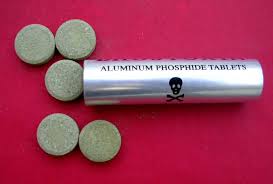
Doctors at the PGIMER achieved a global breakthrough in treating aluminium phosphide (Celphos) poisoning with intravenous lipid emulsion therapy.
- Aluminium phosphideis commonly known as Celphos.
- Aluminium Phosphide is a yellow or dark grey crystalline solid that has a garlic-like odour.
- It is a cheap, effective and commonly used pesticide.
- It liberates lethal phosphine gas when it comes in contact either with atmospheric moisture or with hydrochloric acid in the stomach.
- Phosphine gas, which is highly flammable, and very toxic in nature
- The mechanism of toxicity includes cellular hypoxia due to the effect on mitochondria, inhibition of cytochrome C oxidase and formation of highly reactive hydroxyl radicals.
- Aluminum Phosphide (ALP) is a highly toxic fumigant which is used commonly as an indoor pesticide in agriculture based industry for storage of grains.
- It is often dispersed in pellets; the pellets react with moisture which produces toxic phosphine gas.
- It is also used to make semi-conductor materials such as light-emitting diodes.
- Aluminium phosphide poisoning continues to be a serious public-health challenge, particularly in agricultural states such as Punjab, Haryana and Uttar Pradesh.
Menstrual Health as a Fundamental Right:
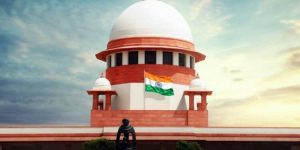
The Supreme Court of India (SC) , in the case of Dr. Jaya Thakur v. Government of India & Ors. (2026), officially recognized Menstrual Health and Hygiene (MHH) as a fundamental right under Article 21 (Right to Life and Dignity).
- The court issued a continuing mandamus (a judicial order through which it keeps a matter pending to monitor compliance ) directing the Centre and states to ensure free sanitary napkins and functional toilets in all schools.
- The Supreme Court has declared Menstrual Health and Hygiene (MHH) an integral part of the right to life, dignity, bodily autonomy, equality, and education under Articles 21 and 14, transforming it from a welfare concern into a binding constitutional entitlement.
- The judgment mandates free sanitary products, functional gender-segregated toilets, safe waste disposal, sensitisation of students and teachers, and strict accountability, while exposing major implementation challenges in infrastructure, funding, and social attitudes.
Manipur Assembly Constitutional Deadlock:
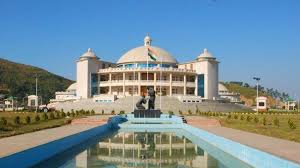
The Manipur Congress president has approached the Manipur High Court, alleging unconstitutional actions by the Governor prior to the imposition of President’s Rule in February 2025, and seeking dissolution of the Manipur Legislative Assembly under Article 174 of the Constitution.
- Manipur has a 60-member Legislative Assembly. The last sitting of the Assembly was held on 12th August 2024.
- Under Article 174(1) of the Constitution, no more than six months can lapse between two Assembly sittings. Hence, the Assembly had to be convened on or before 11 February 2025.
- On 9th February 2025, following the resignation of the Chief Minister, the Governor cancelled the session by declaring the summoning order null and void.
- Consequently, the Assembly failed to convene within the constitutionally mandated six-month period under Article 174(1).
- The petitioner argues that cancelling the Assembly sitting bypassed Article 174(1) and denied a mandatory floor test, violating constitutional morality and renders the 12th Manipur Legislative Assembly constitutionally untenable, warranting its dissolution.
- The sequence of events is alleged to have facilitated the imposition of President’s Rule, raising serious concerns over the misuse of constitutional machinery and gubernatorial discretion.
- The Manipur High Court observed that the matter involves interpretation of Article 174, a substantial constitutional question. The case was referred to the Chief Justice for listing before a Division Bench.
- Article 174 It deals with the sessions, prorogation, and dissolution of the State Legislature. It mandates that the Governor must summon the Legislative Assembly at least once every six months, ensuring that no more than six months elapse between two sittings.
- The Article also empowers the Governor to prorogue the House or dissolve the Legislative Assembly.
IOM Global Appeal 2026 Report:
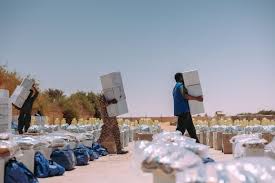
The IOM has requested USD 4.7 billion to assist 41 million people worldwide in 2026, marking a shift toward sharper prioritization amid a Humanitarian Reset and a constrained global funding landscape.
- The Global Appeal 2026 serves as IOM’s engine for transformation, aligning its operations with the Strategic Plan 2024–2028.
- It provides a roadmap for delivering life-saving assistance, driving long-term solutions to displacement, and facilitating safe, regular migration pathways while supporting the world’s most vulnerable populations.
Key Findings and Trends in the Report:
- Record Internal Displacement: At the end of 2024, internal displacement reached an all-time high of 83.4 million people.
- Climate Change Acceleration: Disaster-related displacement rose to 9.8 million in 2024, a 29% increase from the previous year.
- Deadliest Year on Record: With at least 9,197 recorded deaths in 2024, it was the deadliest year for migrants since 2014.
- Economic Impact of Remittances: Migrants sent USD 905 billion in international remittances in 2024, providing a vital lifeline for many countries.
- Narrowing Regular Pathways: Less than 20% of assessed countries have established programs facilitating regular labor migration.
- Workforce Indispensability: There are 168 million migrant workers worldwide, filling critical gaps in sectors like healthcare and innovation.
- Funding Gaps: Out of the USD 4.7 billion required, only USD 1.3 billion has been secured, leaving a USD 3.4 billion gap.
Devnimori Relics of Lord Buddha:
India is set to undertake a profound gesture of spiritual outreach and cultural diplomacy through the exposition of the sacred Devnimori Relics of Lord Buddha in Sri Lanka.The Devnimori Relics originate from the Devnimori archaeological site, located near Shamlaji in the Aravalli district of Gujarat.
It was first explored in 1957 by eminent archaeologist Prof. S. N. Chowdhry.The excavations revealed important Buddhist structures and relics that stand testimony to the flourishing of Buddhism in western India during the early centuries of the Common Era.The relic casket found within Devnimori Stupa, is made out of green schist.It is inscribed in Brahmi Script and Sanskrit language, it reads. “dashabala sharira nilay” – the abode of the Buddha’s bodily relic.It holds a copper box having organic matter with holy ashes, with silk cloth and beads.
Rafah Border Crossing:
Israel reopened Gaza’s Rafah border crossing with Egypt.It’s the southernmost post of exit from Gaza and borders Egypt’s Sinai peninsula.It is controlled by Egypt.There are only two other border crossings from and into the Gaza Strip –
- Erez: A crossing into Israel in northern Gaza, which is for people.
- Kerem Shalom: A solely commercial goods junction with Israel in southern Gaza.
Turtle Trails:
The Union Budget 2026–27 proposal to develop ‘turtle trails’ along key turtle nesting sites in Odisha, Karnataka and Kerala, has triggered concerns among conservationists.Turtle trails are designated coastal pathways and viewing infrastructure intended to promote regulated ecotourism around turtle nesting sites.Conservationists argue that introducing turtle trails threatens the darkness and tranquility essential for mass nesting and that policy efforts should prioritise robust conservation enforcement, including habitat protection and effective regulation of fishing activities, over tourism-driven initiatives.Olive Ridley (Lepidochelys olivacea): It belongs to the class Reptilia and family Cheloniidae, is the smallest sea turtle species, recognized by its olive or grayish-green color and heart-shaped carapace.
Waste-pickers enumeration under NAMASTE scheme:
The Union government released nationwide enumeration data of waste-pickers for the first time under the NAMASTE scheme.The data revealed that 84.5% of waste-pickers belong to SC, ST and OBC communities, highlighting deep social stratification in informal urban labour.
- Total waste-pickers enumerated: 52 lakh across 35 States/UTs
- General category majority in Delhi and Goa
- West Bengal: 42.4% from General category
- 91.95% of sewer/septic tank workers belong to SC/ST/OBC groups
Blue Line along the Lebanon–Israel frontier:
The United Nations Interim Force in Lebanon (UNIFIL) temporarily suspended patrols along parts of the Blue Line after Israel announced the release of a chemical substance near the frontier.The Blue Line is a UN-identified line of withdrawal, marking Israel’s pullback from southern Lebanon.
It is not an international border, but a temporary demarcation used to monitor compliance with UN resolutions.Runs for about 120 km along southern Lebanon, separating it from Israel and the Israeli-occupied Golan Heights.Extends from the Mediterranean coast near Naqoura/Rosh HaNikra to the tri-junction area near Shebaa Farms.



