
Suspension of Sentence in Child Protection Cases:
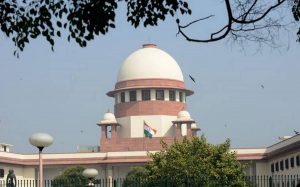
The Supreme Court (SC) stayed the Delhi High Court’s (HC) order suspending the life sentence and granting bail to a former MLA from Unnao (Uttar Pradesh) in the 2017 Unnao rape case, raising critical questions on suspension of sentence, and interpretation of the POCSO Act, 2012.
- The MLA was convicted and sentenced to life imprisonment for the rape of a minor. He was also convicted for the custodial death of the victim’s father.
- Under Section 430 of the Bharatiya Nyaya Sanhita (BNS) 2023, a convict can seek suspension of sentence. However, for serious offences/life imprisonment, suspension is an exception, not the norm.
- It is a discretionary judicial power and suspends only the punishment, not the finding of guilt.
- The HC suspended the sentence primarily holding that an MLA is not a “public servant” under Section 21 of the Indian Penal Code, 1860, and thus the aggravated offence under Section 5(c) POCSO Act, 2012 was prima facie not made out.
- It also considered his over 7 years of incarceration. In Kashmira Singh vs. State of Punjab (1977), the SC held that prolonged incarceration may result in injustice if the conviction or sentence is later modified.
- Bhagwan Rama Shinde Gosai vs. State of Gujarat (1999): The SC held that suspension of a fixed-term sentence under appeal must be exercised liberally.
- Conversely, for serious offences like life imprisonment, as reiterated in Shivani Tyagi Case (2024), suspension is rare and requires an objective assessment of the crime’s nature, gravity, and manner of commission.
- Chhotelal Yadav vs. State of Jharkhand (2025): Suspension in life sentence cases is justified only when there is a palpable or gross error in the trial court judgment indicating possible acquittal.
- Jamna Lal vs. State of Rajasthan (2025): The SC set aside a suspension of a 20-year POCSO sentence, holding that the trial court’s finding that the victim was a minor cannot be lightly unsettled (should not re-examine or reverse factual finding) at the suspension stage.
- Delhi HC’s Controversial Interpretation: The Delhi HC adopted a narrow interpretation, relying on the IPC definition of ‘public servant’ (including judges, military officers, and arbitrators, but excluding legislators).
- This contrasted with the trial court’s broader approach under the Prevention of Corruption Act, 1988, which defines it as any person performing a public duty, a key distinction since such offences attract enhanced punishment.
- Only the IPC defines a public servant. POCSO Act, 2012, does not define a public servant.
- SC’s Stance on Interpretation of POCSO Act, 2012: Precedents like Attorney General for India vs. Satish (2021) (rejecting without direct “skin-to-skin” contact, does not amount to “physical contact” narrow interpretation) and Independent Thought vs. Union of India (2017) (reading down marital exception for rape of a minor wife) affirm that child protection laws must be interpreted purposively, not narrowly or literally.



