
PSLV-C62 Mission:
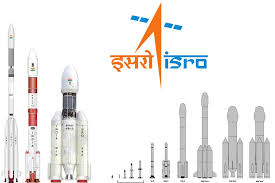
ISRO’s PSLV-C62 rocket is set to lift off from the first launchpad at Sriharikota, marking India’s first space launch of 2026.
- It is a multi-payload mission of the Indian Space Research Organisation (ISRO) that will carry one primary satellite and 18 secondary payloads into space.
- It is ISRO’s first space launch of 2026.
- It is scheduled to lift off from Sriharikota.
- The mission’s primary payload is the earth observation satellite EOS-N1 (codenamed ‘Anvesha’), an hyperspectral imaging satellite developed primarily for the Defence Research and Development Organisation (DRDO) for strategic purposes.
- Unlike conventional imaging satellites, hyperspectral satellites can “see” the Earth in hundreds of wavelengths, allowing them to identify materials and objects with far greater precision.
- This capability makes EOS-N1 a high-value asset for national security, border surveillance and strategic monitoring.
- At the same time, the satellite will also be used for civilian applications such as agriculture planning, urban mapping, mineral detection, and environmental monitoring.
- PSLV-C62 will also carry Europe’s Kestrel Initial Demonstrator (KID), an experimental mission involving a small re-entry capsule developed in collaboration with a Spanish startup.
- The capsule is expected to re-enter Earth’s atmosphere and splash down in the South Pacific Ocean.
- Additionally, commercial payloads from startups and research institutions across India, Mauritius, Luxembourg, the UAE, Singapore, Europe, and the United States are manifested for the PSLV-C62 Mission.
- Several Indian startups and academic institutions are also flying their satellites.
- These include OrbitAID Aerospace’s AayulSAT, CV Raman Global University’s CGUSAT-1, Dhruva Space’s DA-1, Space Kidz India’s SR-2, Assam Don Bosco University’s Lachit-1, Akshath Aerospace’s Solaras-S4, and Dayanand Sagar University’s DSAT-1.
- Bengaluru-based OrbitAID Aerospace’s AayulSAT stands out as a historic first.
- It is India’s maiden on-orbit satellite refuelling payload.
- The mission aims to demonstrate technologies that could extend the operational life of satellites by enabling in-orbit servicing and refuelling.
- Such capabilities are seen as crucial for tackling space debris and improving sustainability in Earth’s increasingly crowded orbital environment.